
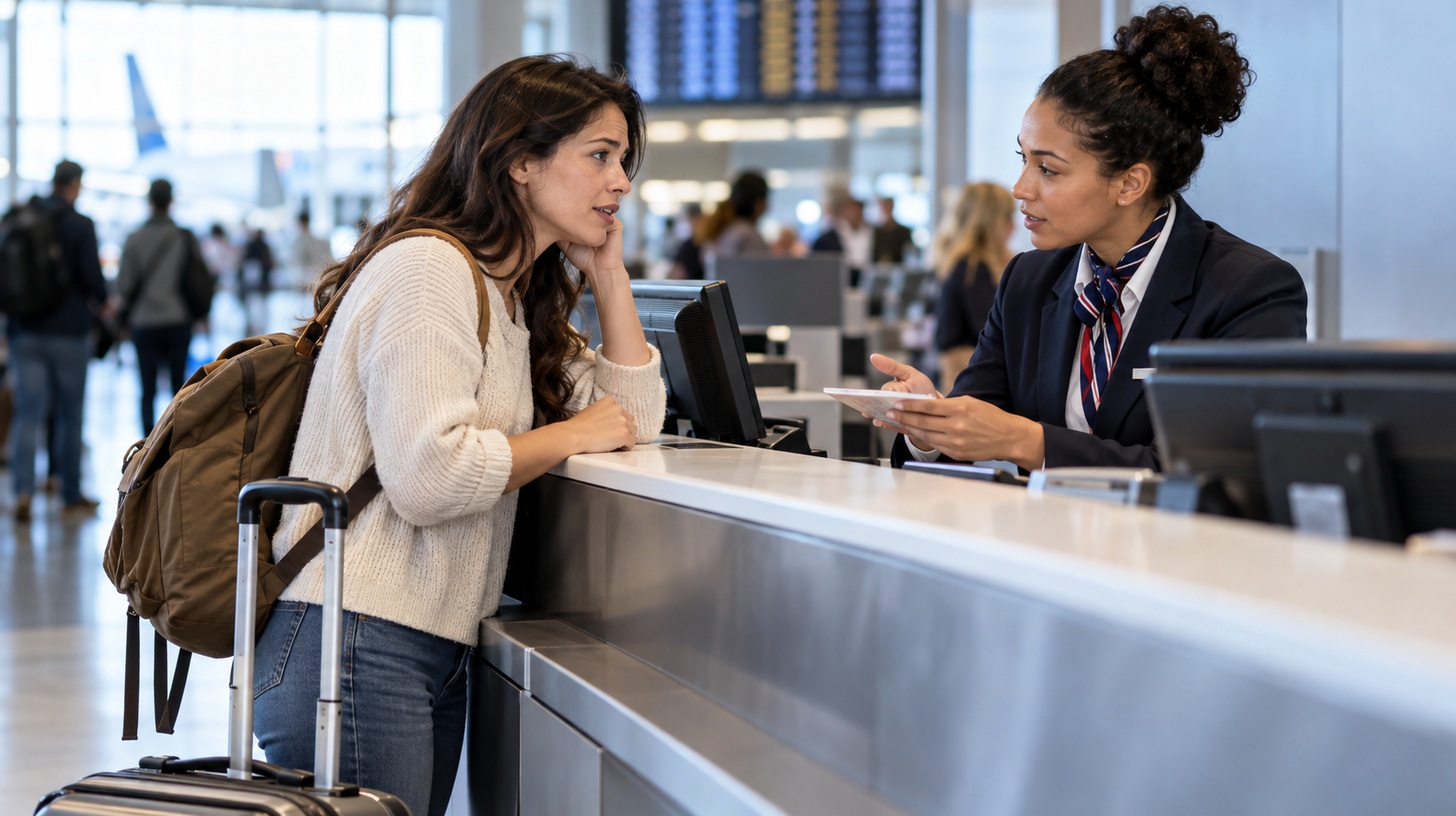
Your flight vanishes from the departure board. Then your hotel sends a check-in reminder. Or your suitcase never arrives. One problem can quickly cause another.
Travel problems abroad are easier to handle when you know who to call first. Ask the airline about your flight, the hotel about your room and your insurer about covered costs. If you bought your policy through qic.online/en/travel-insurance, save the emergency contact number from your documents before you leave. For urgent medical care, call local emergency services first, then your insurer.
Stay calm and assess the situation
Check the airline’s app, airport board and booking email. Times may change more than once. Before buying a new ticket, confirm the flight is cancelled.
Keep a travel emergency checklist on your phone. Add a passport copy, booking code, policy number, local emergency number, embassy contact and a number for someone at home. Save an offline copy in case Wi-Fi fails.
With children or anyone who needs medication, arrange food, water and a safe place to wait. For serious illness or injury, seek medical help first. Otherwise, take screenshots and ask staff to confirm what happened.
Understand your rights when a flight is cancelled
Knowing what to do if a flight is cancelled starts with one question: do you still want to travel? Check the airline’s app while you queue. Ask for the next flight or a different connection. Confirm your options before buying a replacement ticket. Check your refund rights before accepting a voucher.
On flights covered by EU rules, the airline must offer a refund or a new route. It may also owe meals, a hotel and transport. These rules generally cover flights leaving the EU and flights arriving there on an EU airline. The UK has similar protections.
Some passengers can also claim €250, €400 or €600. The amount depends on the route, notice and cause. Severe weather may rule it out, though the airline may still owe meals or a hotel.

In the US, you can get a refund if your flight is cancelled and you reject the alternative. Fixed cash compensation isn’t generally required. Ask about hotel help, and keep proof of all changes. If rerouted, check who covers transfer costs.
A flight refund won’t necessarily cover a missed hotel booking or other prepaid costs. That’s worth checking against any travel insurance you already have, whether it came with your ticket, through a credit card or from a provider such as qic.online/en/travel-insurance. Check your actual policy terms before assuming an expense is covered.
Deal with delays and missed connections
Working out what to do if a flight is delayed means checking your expected arrival, not just departure. Ask why the flight is late and whether your connection is protected. Contact the airline before you miss it. Ask for meal vouchers and record your arrival time.
On flights covered by EU rules, arriving three hours late may mean compensation. Severe storms and other rare events may rule it out. Meals and care can be due sooner. After a delay of five hours or more, you may also be able to stop travelling and request a refund.
In the US, a significant delay can lead to a refund if you choose not to travel. This includes arriving at least three hours late domestically or six hours late internationally. Meals and hotels depend on the airline’s commitments and the cause.
One booking better protects missed connections. With separate tickets, contact the next airline to avoid a no-show.
Protect the rest of your itinerary
A flight change can mean a missed train, late hotel check-in or lost tour. Contact each provider once you know your arrival time. Ask about a new date, a waived fee or a partial refund. Keep the replies for later use. For a package holiday, contact the organiser too, as its duties may differ from the airline’s.
If the trip can’t go ahead, check travel insurance for flight cancellation before paying more. An airline refund may not cover a non-refundable hotel or tour. Insurance may cover those costs if the reason is included in the policy.
Trip interruption is different. You may need to return early due to serious illness or another covered event. If safe, ask your insurer before booking a costly flight. A change of mind rarely qualifies.
Check what your policy actually covers
Travel insurance coverage varies by plan. Some plans pay for urgent care but little else. Others may also cover trip interruption, baggage and extra costs after a qualifying delay.
Check limits, excess, waiting periods and exclusions for existing conditions, risky activities or known events. Make sure your destination and dates match the certificate.

Cover for trips leaving Qatar differs from mandatory health insurance for visitors entering Qatar. A visitor health policy covers eligible emergencies inside Qatar; it is not a substitute for cover during a trip overseas. If you’re leaving Qatar, check that your policy includes your destination, any stops and the day you return. A known problem is rarely covered by a new policy.
Handle lost baggage and missing documents
If your bag is missing, visit the baggage desk before leaving the airport. Show its tag, give a delivery address and request a Property Irregularity Report (PIR). Save the reference and photograph any damage. A baggage tracker doesn’t replace the airline’s report.
Buy reasonable essentials and save receipts. For many international flights, the Montreal Convention caps baggage claims at 1,519 Special Drawing Rights per passenger. That’s a maximum for proven loss, not an automatic payout.
Complain in writing promptly. For covered flights, write to the airline within seven days about damage or within 21 days after a late bag arrives. Lost baggage travel insurance may cover eligible costs the airline doesn’t pay.
For a lost passport, report theft to the police and ask your embassy or consulate about an emergency document. Tell the airline if your return is affected. Keep reports and receipts for extra costs. Ask the embassy how long the new document will take, as some airlines won’t accept a copy of your lost passport.
Get medical help without delay
A medical emergency while travelling comes first. Call the local emergency number for chest pain, severe breathing trouble, serious injury or signs of a stroke. Don’t wait for insurer approval before urgent treatment.
Once safe, call the number on your policy. Ask about suitable hospitals, direct payment and approval for admission or tests. Not every clinic bills an insurer directly.
Keep the doctor’s notes, itemised bill and test results. If you can’t fly, ask for a doctor’s note for the airline and insurer. For minor illness, your assistance team can suggest a clinic. If you need replacement medicine, tell the doctor the generic name and dose, not just the brand.
Arrange support when you’re far from home
Emergency medical assistance abroad may help you find a hospital. It may also pay for an ambulance or a medical flight home. Evacuation often needs insurer approval. Your preferred early flight may not count as medical evacuation. Security evacuations may be covered differently, so check before assuming the same benefit applies.
If you have travel insurance from Qatar, check whether it pays for a medical flight home, and who must arrange it. Save the insurer’s assistance number on your phone and on paper. Medical transport can cost far more than an ordinary ticket, and the insurer may need to speak with the treating doctor before approving it.
If unrest or a natural disaster forces you to leave, follow local officials and call your embassy. Inform the insurer before expensive transport where possible, but don’t delay getting to safety.
Keep a record of extra expenses
Meals, a hotel and a taxi can add up. Save receipts, boarding passes, flight alerts, booking changes, and messages from the airline. Ask for written proof of the delay and its cause. Photograph paper receipts in case you lose them.
Travel insurance for delays may apply only after a waiting period, with daily limits and exclusions. It may not pay costs recoverable from the airline. Check before buying an extra hotel night.
Contact the airline first for flight or baggage problems. Call the insurer promptly for possible covered losses, medical assistance or early return. For a stolen passport, start with local police and your embassy.
File and track your claim
For a travel insurance claim, collect your policy number, travel documents, tickets, receipts and any medical, police or baggage reports. Write a short timeline of what happened, what you paid and what the airline or hotel has already refunded.
Notify your insurer promptly, even if some documents are missing. Use the emergency assistance number for hospital admissions, major treatment or evacuation. Other losses may go through a regular claims form. Reporting deadlines and approval rules vary, so follow the terms on your own certificate.
Submit the evidence through your insurer’s official claims channel and keep the claim reference. Reply if it asks for clearer receipts or extra proof. If your claim is rejected, ask for the reason in writing and review the complaints process. Never claim the same expense twice.

FAQ
What should I do if my flight is cancelled?
Check the airline’s app, then ask for rebooking or a refund if you decide not to travel. Save the cancellation notice and receipts. Your other rights depend on the route and the reason.
What should I do if my baggage is lost?
Report it to the airline before leaving the airport. Get a PIR number, keep your luggage tag and save receipts for essentials. Check the insurer’s reporting deadline too.
What should I do if I get sick abroad?
Get urgent help if your symptoms are serious. Otherwise, contact your insurer’s assistance team to find a suitable clinic. Ask for medical reports and itemised bills.
Does travel insurance cover flight delays?
It can, but the delay must meet your policy’s conditions. Check the waiting period, eligible expenses and any amount the airline should pay first.
Does travel insurance cover cancelled trips?
Some policies cover prepaid, non-refundable costs when you cancel for a listed reason, such as a serious illness. A change of mind usually isn’t covered.
How do I make a travel insurance claim?
Notify the insurer through its official channel, explain the event and submit the requested evidence. Save your claim reference and reply quickly if more documents are needed.
What documents are needed for a travel insurance claim?
Usually your policy number, booking confirmation, receipts and proof of what happened. Depending on the case, add an airline letter, PIR, medical report or police record.
Does travel insurance cover medical evacuation?
It may cover medically necessary transport when the policy includes it. Contact the assistance team for approval where possible. An ordinary early return may be treated differently.
Should I contact the airline or insurer first?
For flight changes and baggage, start with the airline. For serious medical needs, call local emergency services first, then the insurer. Contact your insurer early if a disruption creates a covered expense.