

The gaming industry has come a long way since its humble beginnings. What once started as simple pixelated images on a screen has grown into one of the largest sectors in the global economy and culture. Millions of people around the world play on computers, consoles, and mobile devices, and video games have become a fully established form of entertainment and creative expression.
In this article, we’ll explore the key milestones in the evolution of the gaming industry — from its earliest experiments to today’s cutting-edge technology — and take a look at how games have shaped society and what the future might hold.
The early days: the birth of video games
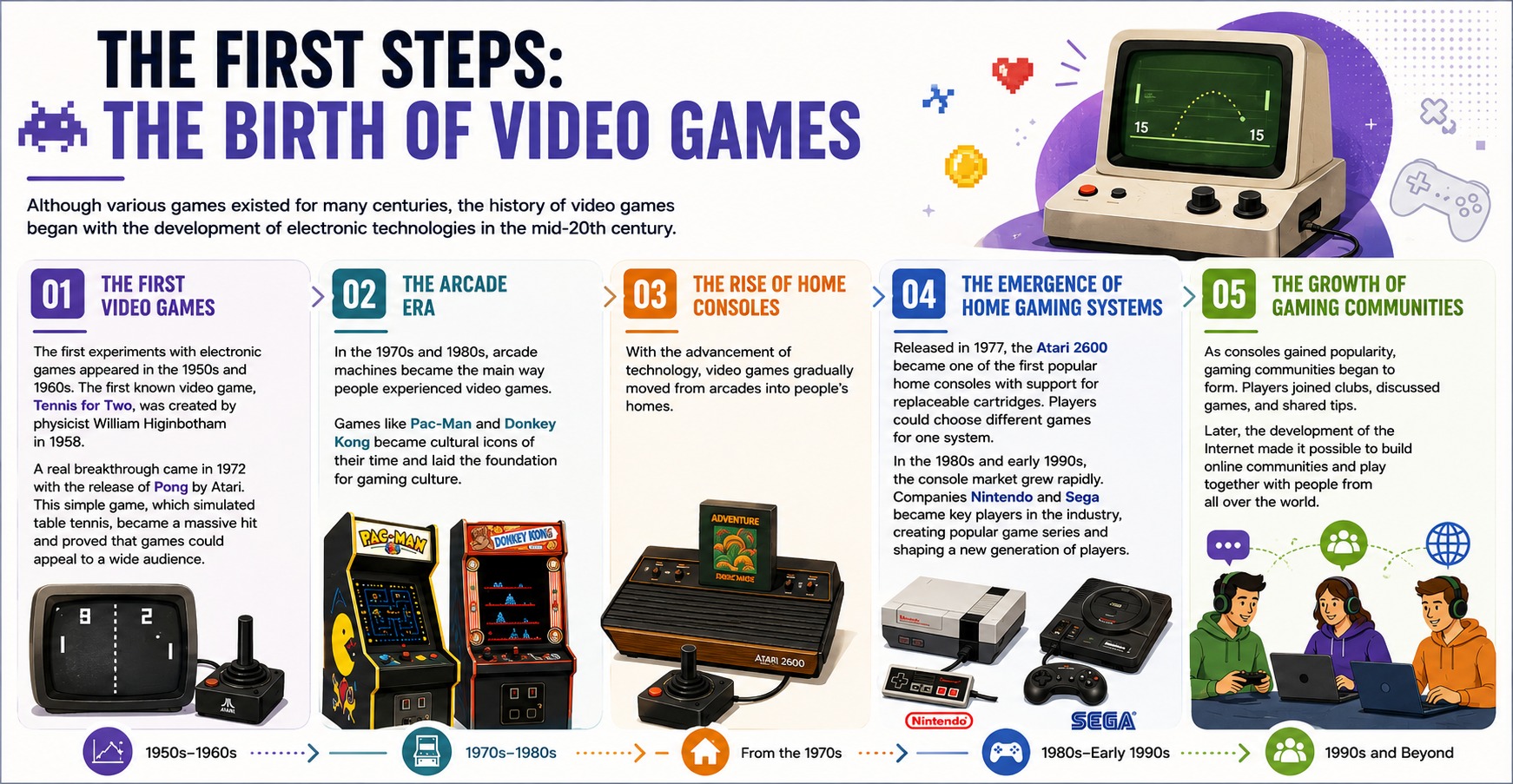
While various forms of games have existed for centuries, the history of video games began with the rise of electronic technology in the mid-20th century.
The first video games
The earliest experiments with electronic games emerged in the 1950s and 1960s. One of the first well-known video games was Tennis for Two, created by physicist William Higinbotham in 1958.
A true turning point came in 1972 with the release of Pong by Atari. This simple game, simulating a game of table tennis, became a massive hit and proved that video games could appeal to a broad audience.
The arcade era
In the 1970s and 1980s, arcades became the primary way people discovered video games. Titles like Pac-Man and Donkey Kong became cultural icons of their time and laid the foundation for gaming culture as we know it.
The rise of home consoles
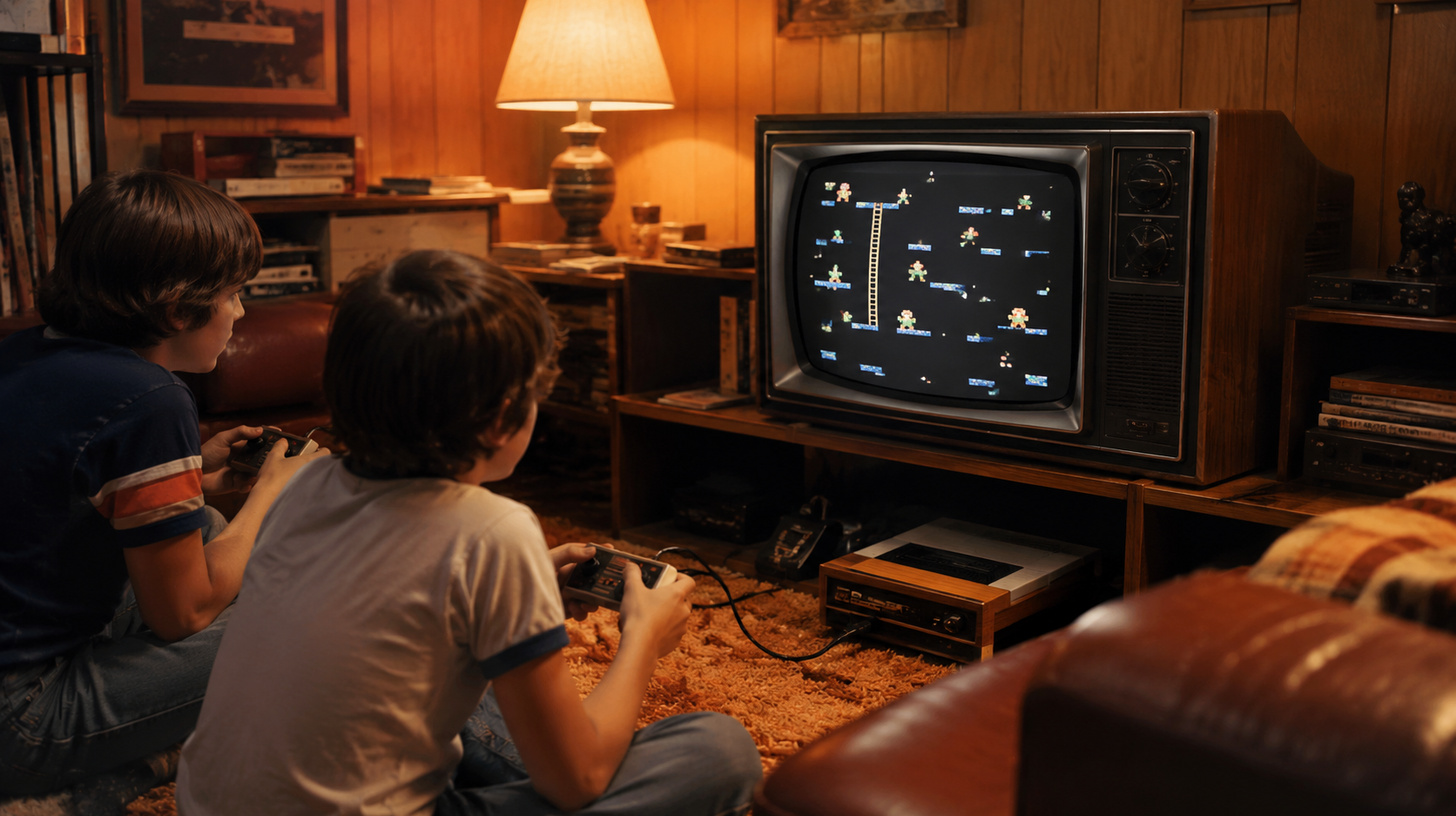
As technology advanced, video games gradually moved out of arcades and into people’s living rooms.
The arrival of home gaming systems
Released in 1977, the Atari 2600 was one of the first widely popular home consoles to support interchangeable cartridges, giving players the freedom to choose from a variety of games on a single system.
Throughout the 1980s and early 1990s, the console market grew rapidly. Nintendo and Sega emerged as two of the industry’s biggest players, creating iconic game franchises and shaping an entirely new generation of gamers.
The growth of gaming communities
As consoles gained popularity, gaming communities began to take shape. Players formed clubs, talked about games, and shared tips and strategies with one another. Later, the rise of the internet made it possible to build online communities and play alongside people from all over the world.
The golden age of PC gaming
Alongside the growth of consoles, personal computers became an equally important gaming platform.
The popularity of PC games
In the 1990s, computers became more widely accessible as graphics improved and processing power increased. Games like Warcraft, Diablo, and StarCraft had a major influence on the development of strategy and role-playing games.
PCs also became a playground for experimenting with new genres, complex gameplay mechanics, and user-created modifications.
Online gaming and MMORPGs
One of the most significant milestones in PC gaming was the rise of massively multiplayer online role-playing games. World of Warcraft, released in 2004, became a global cultural phenomenon, bringing millions of players together in a vast virtual world.
Mobile gaming: games for everyone
The widespread adoption of smartphones transformed the gaming industry, making games accessible to nearly everyone.
The mobile gaming boom
Games like Angry Birds, Candy Crush Saga, and Pokémon GO brought video games to an entirely new audience, including people who had never previously shown interest in gaming.
The biggest appeal of mobile gaming was its accessibility — no specialized hardware required, and short play sessions fit seamlessly into everyday life.
New monetization models
The free-to-play model, where games are available at no cost but generate revenue through in-app purchases, became one of the most popular business models in the industry. It allowed many mobile titles to build massive player bases around the world.
Esports and gaming culture
Over time, video games evolved beyond pure entertainment and became a full-fledged spectator sport.
The rise of esports
Esports turned competitive gaming into a global phenomenon. Tournaments for games like League of Legends, Dota 2, and Fortnite draw millions of viewers and have become a central part of modern gaming culture.
Streaming and new ways to connect
Platforms like Twitch and YouTube Gaming transformed the way players engage with their audiences. Streamers gained the ability to share their gameplay live, and some have gone on to become major media personalities in their own right.